Donald Trump's Health: Doctor's Verdict vs. Public Speculation
The health of a sitting or aspiring president is invariably a topic of intense public interest and scrutiny. In the case of Donald Trump, the debate surrounding his
trump gesundheitszustand has often been a blend of official medical pronouncements, the former president's own confident assertions, and persistent public observations. This article delves into the various facets of this ongoing discussion, comparing the medical reports with the visual cues that have fueled widespread speculation, and offering insights into the broader context of a leader's wellness.
The Official Verdict: What Doctors Say About Donald Trump's Health
According to his personal physician, Dr. Sean Barbabella, Donald Trump remains in "excellent health" and is "fully capable" of fulfilling the demanding duties of the presidency. This assessment followed a routine medical examination at the Walter Reed National Military Medical Center, a common practice for high-ranking U.S. officials. Dr. Barbabella’s report highlighted that Trump's "active lifestyle" significantly contributes to his overall well-being.
Medical reports released after these examinations typically include vital statistics. For Trump, this has included details such as his approximate height of 1.90 meters (6 feet 3 inches) and weight of about 102 kilograms (225 pounds). Perhaps one of the most reassuring aspects of these reports for his supporters has been the consistent declaration that he scored a "full mark" on cognitive tests. This particular detail aims to quell any concerns about his mental acuity, a critical factor for any leader facing the immense pressures of the Oval Office. Such transparent reporting, even if sometimes selective, is crucial for public trust, offering a snapshot of a leader's physical and mental fitness to govern.
Decoding the Public Observations: Bruises, Swelling, and Daily Habits
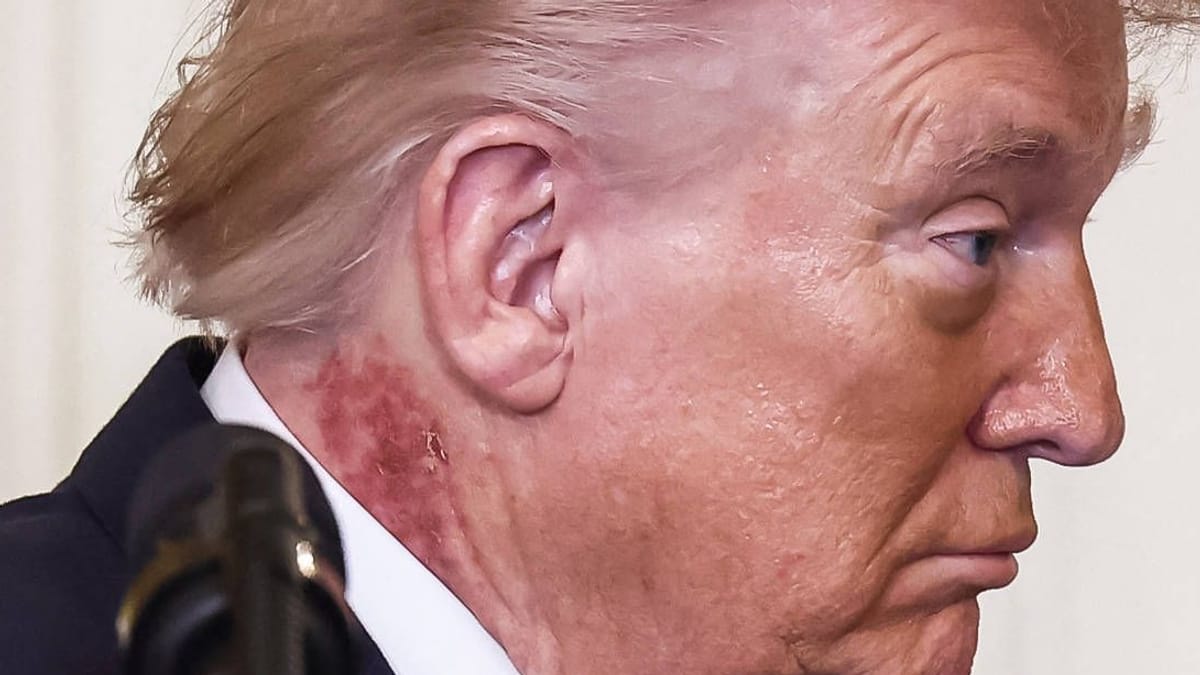
Despite the official reassurances, public appearances by Donald Trump, particularly around 2025, sparked considerable debate about his physical fitness. Observers noted specific visual cues that prompted questions, primarily concerning visible bruising on the back of his right hand and noticeable swelling in his ankles.
The White House and Trump's team offered explanations for these observations. The bruises on his hand, which were sometimes visible even through makeup, were attributed by then-government spokesperson Karoline Leavitt to "frequent handshaking and the intake of Aspirin." Aspirin, a common medication taken to reduce the risk of heart attack and stroke, functions as a blood thinner, making individuals more prone to bruising from minor impacts or even vigorous handshakes.
Regarding the swollen ankles, the White House confirmed a diagnosis of
chronic venous insufficiency (CVI). CVI is a common condition, especially among older adults, where the veins in the legs struggle to effectively return blood to the heart. This leads to blood pooling in the lower legs, causing swelling, discomfort, and sometimes skin changes. While often manageable, CVI can be a persistent issue. Trump himself admitted in an interview with the Wall Street Journal that he briefly tried compression stockings, a standard recommendation for CVI, but discarded them because he disliked them. This highlights a common challenge in managing chronic conditions: patient adherence to medical advice, which is often crucial for effective treatment.
Another point of contention has been Trump’s self-reported Aspirin regimen. He disclosed taking a higher dose of Aspirin daily (325 milligrams) than his doctors typically recommend, stating a "superstitious" reluctance to lower the dose, having taken it for 25 years. While low-dose aspirin (often 81mg) is widely used for cardiovascular risk reduction, higher doses carry an increased risk of side effects, including bleeding (as mentioned with the hand bruises) and gastrointestinal issues, without necessarily providing additional cardiovascular benefits. This illustrates a critical aspect of personal health management: the importance of strictly adhering to a physician's prescribed dosages and not self-adjusting medication, even if one feels "superstitious." For more detailed insights into this, you can explore
Trump's Health Unpacked: Aspirin Dose, Genes & Venous Weakness.
Beyond the Physical: Cognitive Acuity and Lifestyle Choices
Beyond the visible physical signs, other aspects of Donald Trump’s health and habits have come under public scrutiny. His perceived moments of drowsiness during White House meetings, captured on video, led to speculation about his alertness and sleep patterns. Trump, however, countered these claims, stating, "I just close them (my eyes). That is very relaxing for me." He attributed such images to simply "blinking," catching him mid-blink.
Trump has long maintained that he requires little sleep, a habit he often referenced during his first term. He typically starts his day early at the White House residence before heading to the Oval Office around 10 AM and working until 7 or 8 PM. This intensive schedule, combined with a self-professed reliance on "good genes" for his energy, paints a picture of a leader who thrives on constant activity. While some individuals can function effectively on less sleep, adequate rest is generally considered crucial for sustained cognitive function, decision-making, and overall well-being, especially in high-stress roles.
Concerns about his hearing were also dismissed by Trump, who claimed issues only arise "when many people speak simultaneously." This, combined with his perfect score on cognitive tests, suggests that any challenges are situational rather than indicative of a broader impairment. The demands on a president's cognitive and physical health are immense, requiring stamina, focus, and rapid information processing. A president's ability to remain sharp and engaged under pressure is paramount. Dive deeper into the details of his medical reports and daily habits at
Is Trump Healthy? Inside the President's Medical Report & Habits.
The Public's Right to Know: Transparency in Presidential Health
The constant examination of a president's
trump gesundheitszustand is not merely sensationalism; it's a reflection of the public's legitimate interest in the capabilities of their leader. Historically, presidential health reports have varied in their detail and frequency, evolving over time to meet increasing demands for transparency. The rationale is clear: a president's health directly impacts national and international stability. A leader must be physically and mentally capable of handling crises, making informed decisions, and maintaining a rigorous schedule.
This public interest creates a delicate balance between a leader's right to privacy and the public's right to know. Presidential candidates and incumbents often face the challenge of projecting an image of vigor and competence while navigating inevitable age-related changes or chronic conditions. The media plays a crucial role in scrutinizing these aspects, providing a check on official narratives and ensuring a degree of accountability.
For the public, understanding the medical context behind observations can be enlightening. For example, knowing that swollen ankles could be due to a common, manageable condition like CVI, rather than a more severe, undiagnosed ailment, can shape public perception. Similarly, understanding the nuances of aspirin use and its side effects can clarify why certain physical signs appear. This transparency fosters trust and helps the electorate make informed decisions about their leadership.
Conclusion
The ongoing discussion around Donald Trump's health encapsulates the complex interplay between medical facts, personal habits, political narratives, and public perception. While his physician attests to his "excellent health" and unimpaired cognitive function, observations regarding conditions like chronic venous insufficiency and his unique aspirin regimen have fueled public curiosity. Trump's steadfast belief in his "good genes" and high energy, alongside his rigorous work schedule, paints a picture of a leader confident in his endurance.
Ultimately, the
trump gesundheitszustand remains a subject of considerable interest, especially with his continued presence on the political stage. The blend of official medical reports and public speculation underscores the unique burden of transparency placed upon those who seek or hold the highest office. It serves as a reminder that while medical science provides a foundation, public perception and individual choices also heavily influence how a leader's fitness is understood.